Causes
When a pad is a luxury
Around 500 million people worldwide lack access to menstrual products. In Europe, too, the problem is closer than it seems.
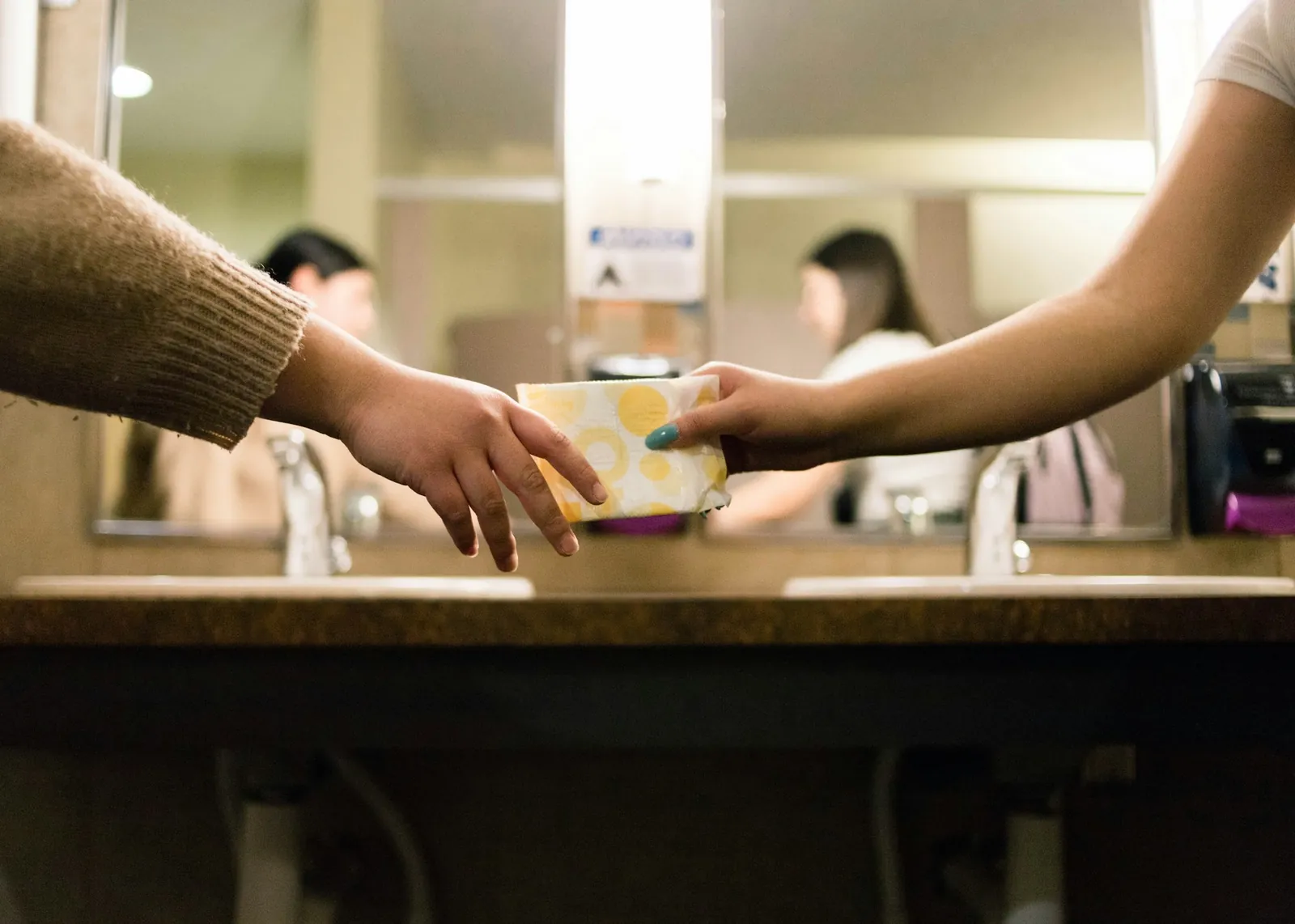
Your period starts and there’s nothing in your bag. Most of us sort that out in five minutes at the nearest shop. For many people, though, the question isn’t “where” but “with what money”.
What period poverty is
The World Health Organization defines it as the lack of access to menstrual products because of financial constraints.1 The European Parliament uses a broader meaning that also covers the lack of menstrual education, toilets, handwashing facilities and waste disposal.3
When there is no pad, people improvise – or simply stay at home. The European Parliament’s research service describes the consequences as unsafe or unhealthy menstrual practices and less participation in society, education and work.3
On any given day, more than 300 million women around the world are menstruating.2 For them it isn’t an exception – it’s part of every month.
It isn’t only a problem “somewhere else”
It’s easy to picture period poverty as something that happens on another continent. The European data says otherwise:3
- in Belgium, 12% of girls and women aged 12 to 25 have been unable to afford menstrual products at some point – rising to 45% among those living in poverty;
- in France, period poverty affects around 20% of young women, according to the IFOP institute;
- in Barcelona, more than 15% of young women report having experienced it;
- in Germany, 23% of participants in an online survey described their monthly period costs as a financial burden.
People on low incomes, refugees, young people and people with disabilities are hit hardest.3 For homeless women, periods are especially hard to manage, because they often lack access even to a toilet.3
We could not find published national data for Bulgaria. That doesn’t mean the problem isn’t there. It means nobody has measured it yet.
A need, not a choice
About half of the EU population menstruates at some point in their lives – around 450 cycles on average.3 Researchers estimate that a person may use more than 10,000 menstrual products over a lifetime.5
450 cycles. More than 10,000 products. That isn’t a whim – it’s a basic need.
That’s why the so-called “tampon tax” – VAT on menstrual products – has been argued over for years. In 2022 the EU changed the rules to let countries apply reduced rates, even zero, to these products. Before that, the lowest rate allowed was 5%.3
Countries have used this very differently. Ireland, Cyprus and Malta apply a zero rate. Austria cut VAT from 20% to 10% in 2021, and Finland from 25.5% to 14% at the start of 2025. Hungary, Denmark and Sweden still apply standard rates of 25% to 27%.3
Does a lower tax actually help? A University of Vienna study of the cuts in Austria, Belgium, France and Germany concluded that the savings were passed on to consumers, and that low-income households were able to buy more.3
What works
Where governments act, the change is visible:
- Scotland is the first country in the world to protect in law the right to free period products. Councils and education providers must make them available free of charge to anyone who needs them.4
- France installed free product dispensers at all universities from September 2021. Since 2024, young people under 26 and people on complementary health cover can get free reusable products – around 6.7 million people.3
- Catalonia has handed out free reusable products in every pharmacy since April 2024.3
- Gdańsk in Poland has had “pink boxes” with free products outside municipal offices, social centres and schools since the end of 2019.3
Money isn’t the only answer. A lack of knowledge is part of the poverty too. According to the WHO, only around two in five schools worldwide (39%) provide menstrual health education.1
What you can do
- Donate pads or tampons to an organisation that helps women in need. Ask first what they need most.
- Leave a few pads in the toilets at work or school – for anyone who forgot or can’t afford them.
- Ask your council or school whether they offer free products. If they don’t, suggest it.
- Talk about it. The silence and shame around periods are part of the problem.1
Back in 2021, the European Parliament called on countries to make free products available to anyone who needs them and to use the option of a zero VAT rate.3 The call is there. It still needs to be heard.
Sources
- World Health Organization. Menstrual health – fact sheet, 18 June 2026.
- World Bank. Menstrual Health and Hygiene, 12 May 2022.
- European Parliamentary Research Service (EPRS), M. Lecerf. Addressing menstrual poverty in the EU, May 2025.
- Scottish Government. Period Products Act comes into force, 14 August 2022.
- Upson K, Shearston JA, Kioumourtzoglou MA. Menstrual products as a source of environmental chemical exposure: a review from the epidemiologic perspective. Current Environmental Health Reports, 2022.